
OTA vs Direct Bookings in 2026: Who Really Wins?
BY AZULOMO | 4 MIN READ
OTA vs Direct Strategy for Short-Term Rentals
Airbnb vs Direct Booking: What Makes More Profit?
If you own or manage a short-term rental, boutique hotel or holiday home in Europe, you have probably felt the quiet tension between OTA visibility and direct booking profit. Platforms like Booking.com, Airbnb and Expedia Group still dominate discovery, especially across Europe’s beautifully complex cross-border travel market.
Direct bookings are growing, yes, but only for hosts who treat them as a system, not a hope. Europe behaves differently from the US. Guest trust, language, seasonality and booking habits all shape the outcome. And while occupancy looks impressive on a dashboard, net revenue is what actually sustains your business. The smartest hosts are not anti-OTA. They are strategically calm. If you have ever stared at a 22 percent commission line and felt a small internal wince, this conversation is for you.
Because this is not about choosing sides. It is about understanding leverage. Where does demand really come from? What does it truly cost you? And how do you design a distribution strategy that feels stable, profitable and future-proof rather than reactive? When you shift from platform dependency to strategic design, everything changes.
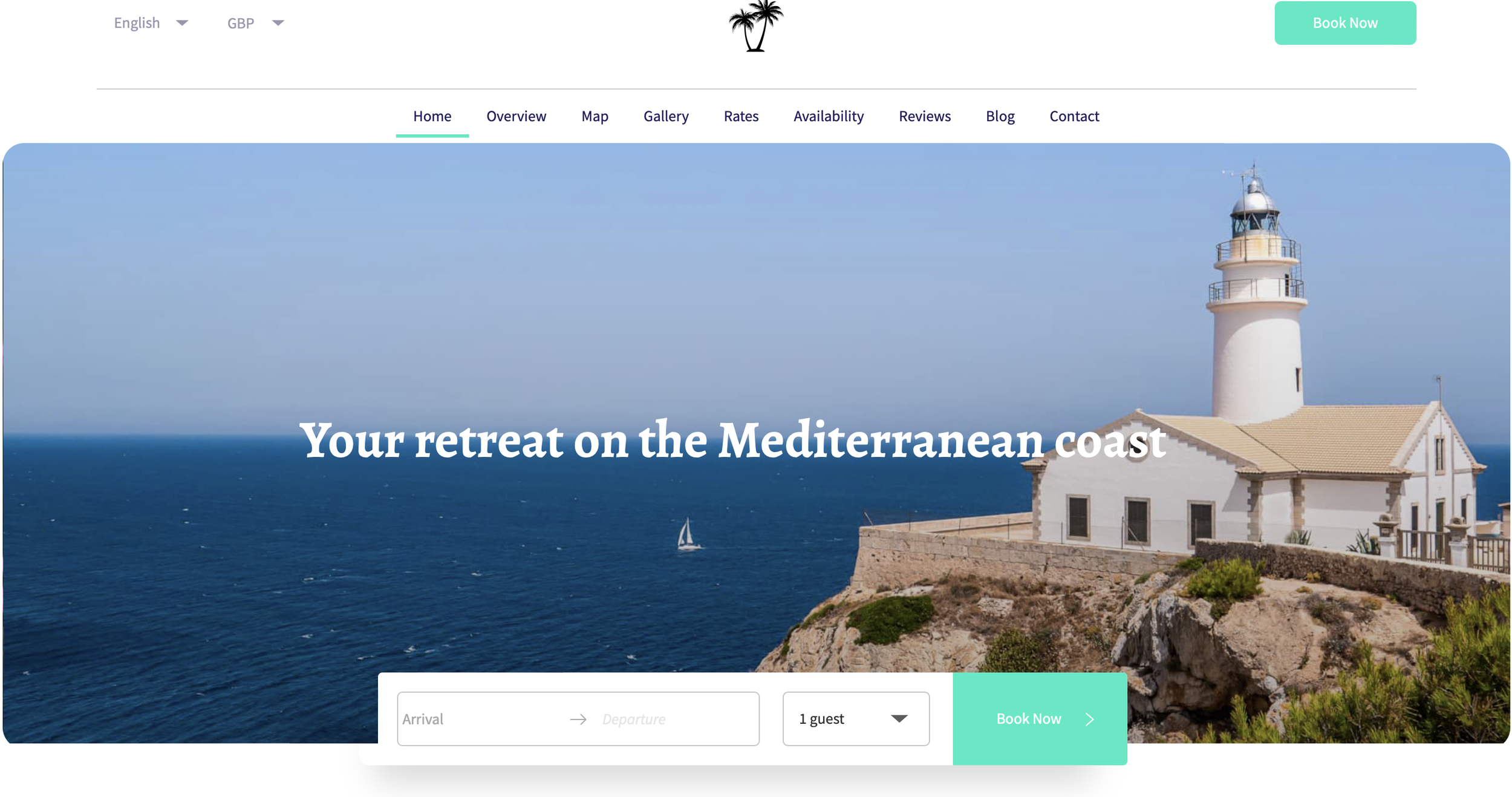
Image: Lodgify Direct Booking Template
OTAs fill tonight’s calendar. Direct bookings protect tomorrow’s margin.
OTA vs Direct Bookings: What Is Actually Happening in Europe Right Now
Let’s take the emotion out of it for a moment. In Europe, OTA bookings remain structurally strong. That is not a failure of hosts. It is a reflection of how Europeans travel.
Cross-border bookings are normal. A Dutch family books Portugal. A German couple books Lake Garda. A Swedish group books the Alps. When language, currency and consumer rights vary, platforms like Airbnb or Vrbo provide psychological safety. And yes, that matters.
OTAs win on:
Visibility
International trust
Mobile-first booking
Last-minute demand
Built-in review systems
They are extraordinarily efficient demand engines. But here is the part most hosts only feel, rather than measure: Commission is not just a line item. It is structural margin leakage.
When you add:
15-25% commission
Promotional discounts
Preferred visibility schemes
Brand bidding
Your true net revenue shifts, shall we say, rather quietly in the background…
What this means for hosts
OTAs are not the villain, not at all. They are your acquisition layer.
The smarter question is:
How do I reduce long-term dependency?
How do I convert OTA guests into direct repeat guests?
How do I protect margin without losing visibility?
This is where infrastructure becomes important. You cannot increase direct bookings without a direct booking system.

Direct Bookings: The Calm, Structured Alternative
Direct bookings sound appealing. They are. No commission. Full guest data. Higher lifetime value. Clearer communication. But direct booking growth does not happen by accident.
It requires:
A professional website
A reliable booking engine
Clear pricing structure
Email automation
A simple rebooking flow
Platforms like Lodgify have made this so much easier for independent hosts by providing website builders, integrated booking engines and secure payment systems that connect directly to your channel manager. The key shift is this: your website stops being a polite digital brochure and becomes a revenue channel. It is no longer just sitting there looking pretty. It is working!
In Europe, where repeat travel behaviour is almost a family tradition, this becomes especially powerful. Families return to the same region year after year. Couples revisit the same coastal town like it’s their “place.” Ski groups rebook the same chalet week every winter with military precision. When your direct booking infrastructure is clear, fast and trustworthy, those returning guests have a simple path back to you without paying commission again for the privilege.
If you are considering strengthening that pathway, take a look at our Lodgify review where we break down how the platform supports automation, channel integration and long-term margin protection for holiday rental hosts. Because the goal is not to dramatically storm off the OTA stage. It is to build infrastructure that lets your website earn its keep.
If you:
Capture their email
Follow up post-stay
Offer a simple returning guest incentive
Make your direct booking experience seamless
You slowly shift your revenue mix. This is not about abandoning OTAs. It is about retaining value.
What this means for hosts
If you want more direct bookings:
Build your own booking infrastructure.
Use a system like Lodgify to make it frictionless.
Capture guest emails on every stay.
Treat repeat guests as your core asset.
Every repeat direct booking reduces next year’s acquisition cost. That is compounding profitability.

Europe vs US: Why Context Changes Strategy
The US benefits from strong domestic travel and embedded loyalty programmes. Europe operates differently…
Europe is:
Multilingual
Cross-border
Seasonally complex
Highly OTA-driven for discovery
That makes hybrid strategy essential. You acquire via OTA. You retain via direct. Inside the azulomo philosophy, this is called calm distribution design.
Inside the The Slow Living Hosting Masterclass™, we break this down practically:
How to map guest origin patterns
How to calculate net revenue per channel
How to design repeat guest systems
How to structure pricing to support direct growth
How to build a distribution strategy that aligns with your long-term goals
Because distribution is not just technical. It is strategic.
What this means for hosts
Do not copy a US-based strategy if you operate in southern Europe.
Instead:
Analyse where your guests come from.
Measure repeat behaviour.
Build infrastructure before reducing OTA exposure.
Reduce dependency gradually.
Strategic calm beats emotional decisions.

The Metric That Changes Everything
Occupancy is easy to celebrate. Full calendar. High booking count. Busy turnover schedule.
But occupancy does not measure:
Commission cost
Marketing spend
Discounting impact
Lifetime guest value
A 5-10% shift from OTA to direct bookings can significantly improve profitability without increasing occupancy at all.
Why? Because commission savings go straight to the bottom line. Yet some hosts swing too far and attempt to eliminate OTAs entirely. Visibility drops. Shoulder season weakens. Cash flow tightens.
The calmer strategy:
Open wide on OTAs in low demand.
Tighten in high compression.
Encourage repeat direct bookings.
Track net revenue monthly.
Inside the azulomo masterclass, we call this revenue architecture. You design it. You measure it. You refine it.
Not emotionally. Systematically.
__
The Hybrid Model: What Smart European Hosts Are Doing in 2026
The hosts who are thriving are not anti-platform. They are channel architects.
They:
Use OTAs for acquisition.
Build direct booking websites using tools like Lodgify.
Capture guest data consistently.
Automate follow-up.
Encourage repeat direct stays.
Protect rate integrity.
Measure net revenue by channel.
They reduce dependency gradually. Not dramatically. Because stability feels better than spikes.
__
A Quiet Conclusion, the azulomo Way
If there is one thing we believe at azulomo, it is this: distribution is not a technical setting inside your PMS. It is an emotional and financial design choice. OTA bookings are not bad. Direct bookings are not superior. They each serve a role. The stress only appears when there is no structure holding them together.
When you understand:
where your guests first discover you
what it costs to acquire them
how likely they are to return
how easy it is for them to rebook
what your net revenue actually looks like per stay
you stop reacting and start designing. And that is the shift.
The goal is not to “escape” platforms like Booking.com or Airbnb. The goal is to use them intelligently while quietly building your own ecosystem alongside them. A professional direct booking website, perhaps powered by Lodgify. A simple repeat guest system. A clear revenue dashboard. A calm, intentional plan.
Inside the azulomo Hosting Masterclass, this is not theory. We break it down step by step:
How to design your channel mix intentionally
How to convert OTA guests into direct repeat guests
How to build a website that actually converts
How to price in a way that protects margin

Because slow living hosting is not about doing less. It is about doing the right things deliberately. It is about moving from commission anxiety to revenue clarity. From reactive listing management to strategic ownership.
From busy calendars to profitable ones. When you approach your booking channels with calm structure instead of frustration, something shifts. The numbers make more sense. Decisions feel less emotional. Growth feels steadier.
And that is the quiet luxury of slow. Not anti-OTA. Not obsessively direct. Just intelligently designed.
One measured decision at a time…

“OTA bookings remain dominant in Europe due to cross-border trust and platform visibility. Direct bookings increase profitability when hosts invest in systems, repeat guests and digital infrastructure. The most successful short-term rental and boutique hotel operators in 2026 use a hybrid distribution strategy that balances visibility with margin.”
Discover what luxury travellers really want in 2026, from calm design to seamless booking. Learn how to increase bookings, trust, and guest loyalty.