
Opening a Boutique Guesthouse? What You Need to Know
BY ELKE BRETZ, FOUNDER OF AZULOMO | 5 MIN READ
What Should You Know Before Opening a Boutique Guesthouse?
Beyond beautiful interiors and good intentions: the strategic understanding, commercial judgement and guest experience expertise that turn a promising property into a distinctive, desirable and financially sustainable hospitality business. Because the real challenge isn't simply opening somewhere beautiful to stay, but creating something guests have compelling reasons to choose, value and remember.
There is something rather wonderful about imagining your own boutique guesthouse.
Perhaps you've found an old farmhouse in Portugal, a townhouse in a historic village, or you're creating an eco-retreat near the Alentejo coast, where architecture, nature and a slower rhythm of life come together.
You can already picture the interiors, the breakfast terrace and those thoughtful details that will make the property feel special. Naturally, you begin researching everything you'll need to learn, from interior design and pricing to marketing, booking systems and hospitality operations. Perhaps you're even looking for a course to help you open your guesthouse or run a successful holiday rental.
But before investing in any of these, there is a more important question. Do you know how to turn this particular property, in this particular location, into an experience that the right guests will actively choose, value and pay for?
Because a beautiful property is an asset, and a well-run property is an operation. A successful boutique guesthouse needs to be both, supported by a clear understanding of its guests, identity, experience and commercial potential.
That requires more than collecting information. It means developing the judgement to recognise what matters, understand how decisions influence one another and know where your investment will create genuine value.
__
01. Understand the business before designing the property
A rural farmhouse could become a romantic retreat, a destination for restorative escapes or a base for travellers exploring the surrounding region. Each direction attracts different guests, creates different expectations and requires a different commercial approach.
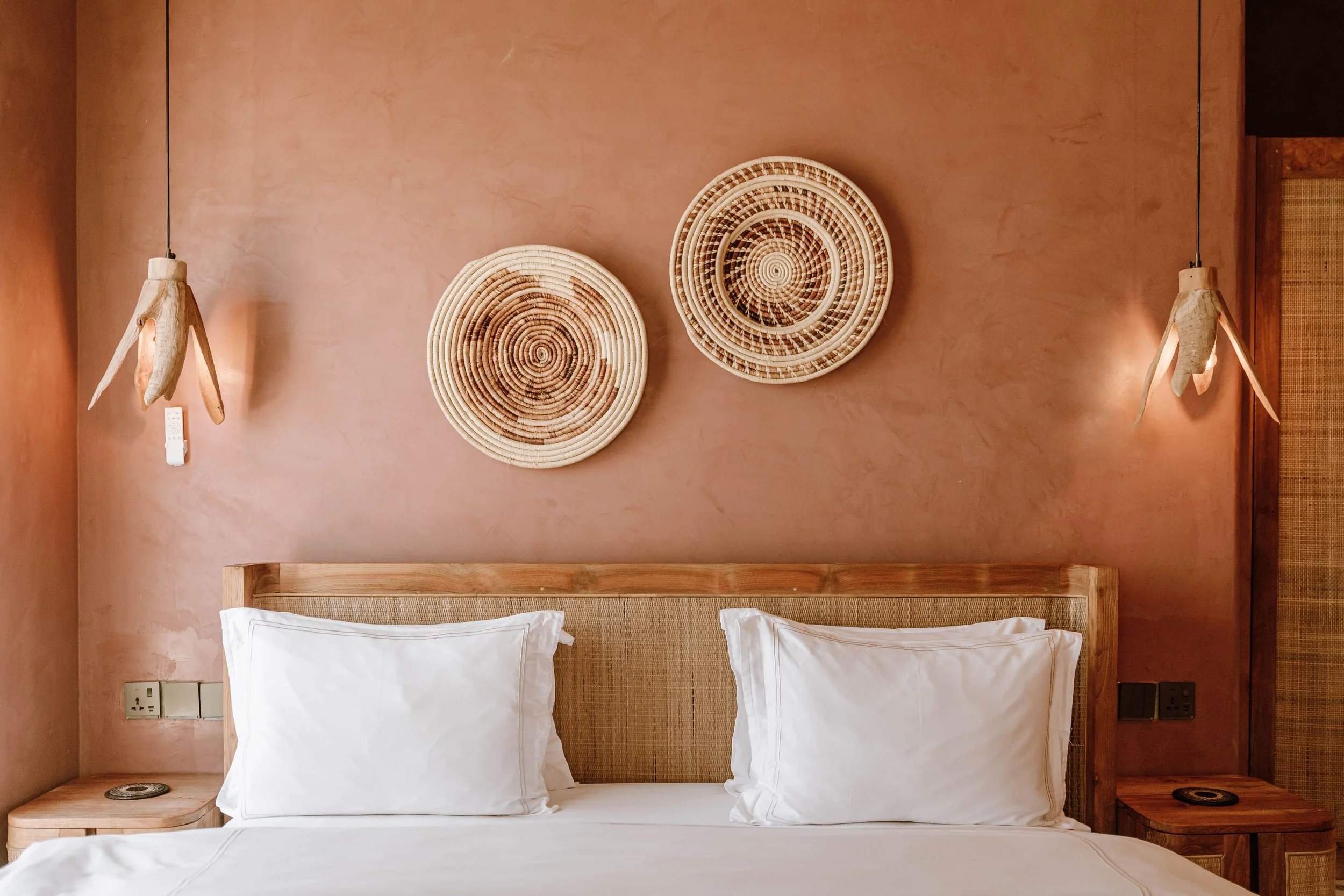
Consider an eco-retreat near the Alentejo coast, where carefully considered architecture sits naturally within the landscape. Earthy clay colours echo the surrounding soil, thoughtfully selected natural and sustainable materials bring warmth and texture, and spaces are designed to embrace the changing light, climate and rhythm of the seasons. Experiences might invite guests to slow down, discover local traditions, connect with neighbouring producers or simply enjoy the extraordinary pleasure of doing very little. Together, these choices create something more meaningful than an attractive property: a distinctive experience rooted in its surroundings. But how do you translate that vision into commercial value? Will guests recognise and pay for what makes it special? Which investments genuinely enhance their experience, and can the business deliver its promises consistently, sustainably and profitably?
These questions should influence your investment before the renovation or the build begins.
For perspective, a four-room guesthouse achieving an average nightly rate of €180 and 60% annual occupancy would generate approximately €157,680 in annual room revenue. At €145 and 40% occupancy, that falls to €84,680, a difference of €73,000 a year. These are illustrative scenarios, assuming year-round availability and before operating costs, taxes and distribution fees. But they demonstrate why understanding your guests, market demand, pricing potential and commercial positioning matters before the first room is furnished.
A beautiful concept is not yet a viable business. You need to understand who you're creating it for, why they would choose it and what it must earn to remain sustainable.
/ THE SLOW LIVING HOSTING MASTERCLASS™
Make Your Stay Distinctive
→
/ THE SLOW LIVING HOSTING MASTERCLASS™
Build Something Worth Choosing
A transformative approach to independent hospitality, bringing together guest psychology, distinctive design and commercial intelligence. Discover how to turn your vision into a considered guest experience, make better decisions with confidence and build a hospitality business that feels as rewarding to run as it does to stay in.
EXPLORE THE MASTERCLASS →
02. Understand your guests beyond their demographics
Knowing that your guests are couples aged 35–55 tells you remarkably little about what they actually value.
One couple may want complete tranquillity, while another hopes to explore local culture, discover exceptional food and spend their days outdoors. Both might book the same guesthouse, but their motivations will influence what they notice, appreciate and remember.
This is where guest psychology becomes commercially useful. Understanding why people travel and what they hope to feel helps you make more considered decisions about layouts, amenities, communication and experiences.
A generous terrace might offer greater value to guests seeking rest than an extensive programme of activities. A thoughtfully equipped kitchen might matter more to long-stay travellers than daily housekeeping. Neither is universally better, because value depends on the guest and the experience you intend to deliver. And understanding your guests also means recognising who your property is not for. Trying to accommodate everyone often creates unnecessary costs and an increasingly diluted identity.
The goal isn't to offer everything to everyone. It's to become exceptionally relevant to the guests you are best placed to serve.
__
03. Know what makes your property genuinely distinctive
A guesthouse can have exquisite furniture, beautiful photography and impeccable finishes, yet still feel interchangeable with dozens of other properties. Linen bedding, handmade ceramics and a neutral palette might look wonderful, but they rarely explain why someone should choose your property rather than another.
“Distinctiveness comes from understanding what genuinely belongs.”
The architecture, history, landscape and culture surrounding a property can create an identity that cannot simply be reproduced elsewhere. For an Alentejo eco-retreat, that might mean architecture responding intelligently to the climate, materials connected to the region and meaningful relationships with local producers.
But rooted-in-place hospitality is not about decorating with local references. It's about allowing the character of somewhere to influence how guests experience it.
When that identity becomes clear, it can shape everything from design and photography to communication and the experiences you recommend. More importantly, it gives guests a meaningful reason to choose you beyond comparing facilities and nightly rates.
__
04. Learn to recognise where design creates value
One of the most important skills a hospitality founder can develop is knowing which design decisions deserve investment.
Imagine choosing between a beautiful statement chair and improving sleep quality in your guest bedrooms. Both might contribute to the experience, but if your guests are seeking restoration, the mattress, blackout, acoustics and temperature control may have a far greater influence on satisfaction.
Thoughtful design considers how a space functions, feels and performs over time. A cheaper material may require frequent replacement, an impressive lighting system may frustrate guests through confusing controls, and a beautifully styled bathroom may disappoint if everyday usability has been overlooked.
These decisions have consequences for guest comfort, maintenance and long-term costs. The objective isn't necessarily to spend more, but to know what deserves protecting when budgets require compromise.
The most valuable design decision isn't always the most visible. It's the one that makes the greatest difference to the guest experience.
__
05. Design the entire experience, not just the interiors
Guests don't experience your property as separate departments. They experience one continuous journey, beginning with the first photograph they see and continuing through booking, arrival, the stay and departure.
A property promising tranquillity can undermine that promise with confusing arrival instructions. A beautiful bedroom loses value when guests struggle to sleep, while a wonderful stay can end awkwardly through an unnecessarily complicated checkout.
These moments shape how people feel about the experience as a whole. Understanding guest experience design means recognising where expectations are created, where unnecessary effort occurs and which moments deserve particular attention. And better hospitality doesn't always mean adding more. Sometimes the most valuable improvement is removing friction, simplifying communication or making something work so intuitively that guests barely notice it.
The result is an experience that feels considered without feeling complicated.
—
06. Build a business that can deliver its promise
There is a romantic image of running a boutique guesthouse, filled with welcoming guests, preparing breakfast and sharing local recommendations. The reality also includes laundry, maintenance, supplier coordination, administration and unexpected problems.
When everything depends on the owner's constant attention, a beautiful hospitality concept can quickly become an exhausting business.
Good systems aren't about removing personality. They create the consistency and breathing space that allow genuine hospitality to flourish.
But every additional service has consequences. Daily housekeeping, elaborate breakfasts and personalised extras may enhance the experience, while also influencing staffing, margins and operational complexity.
For an off-grid retreat, reliable energy, water management and contingency planning become part of the hospitality promise itself.
The question is not how much you can offer, but which services genuinely support your identity, which can be delivered consistently and whether the operating model remains financially and personally sustainable.
__
07. Know how to measure what matters
A full booking calendar may feel reassuring, but occupancy alone doesn't tell you whether your business is successful.
Discounting can increase bookings while reducing profitability. Expensive amenities can attract attention without generating sufficient value, and more website visitors mean little if the right guests aren't converting.
Understanding the relationship between perceived value, pricing, guest satisfaction, distribution costs and operating performance allows you to make more informed decisions.
Repeated complaints about sleep quality may reveal a better investment opportunity than another decorative upgrade. Strong website traffic but few bookings may suggest problems with positioning, photography, pricing or booking friction.
Measurement helps you distinguish assumptions from evidence and understand whether improvements are genuinely working. Commercial confidence comes from knowing not just what to improve, but why it matters and how you'll recognise whether it worked.

__
08. So, what should you look for in a hospitality course?
There is a significant difference between learning about hospitality and developing the ability to create a successful hospitality experience.
You can learn interior styling without knowing which improvements deserve your budget. You can study marketing without understanding why your property is genuinely different. And you can learn operational processes without creating a business that works reliably when you're not there. When choosing a holiday rental hosting course, boutique hospitality programme or guesthouse management qualification, look beyond the number of lessons, templates and certificates.
Consider what you'll actually be capable of doing afterwards. Will you know how to diagnose problems, evaluate competing investments, connect guest expectations with operational decisions and measure whether improvements create value? Does the teaching explain why something matters, or simply tell you what to do? And does the instructor bring relevant, verifiable expertise?
The most valuable hospitality education doesn't simply give you more information. It develops the judgement to make better decisions even after the course has finished.
__
09. From knowing more to knowing what matters
Perhaps the most important realisation is that everything we've explored is connected.
Who you welcome influences what you design. What you design influences how guests experience the property. That experience shapes what people value, remember and share. And your operations, communication and marketing determine whether the promise can be delivered consistently and profitably.
Yet these subjects are often taught separately, leaving founders to work out how everything fits together.
This is where the real transformation happens. When you can recognise a property's potential beyond its appearance, brief a designer with clarity, challenge an unnecessary expense and understand which improvements will strengthen both the guest experience and the business.
You stop simply creating a beautiful place to stay and start thinking like the creator of a distinctive hospitality business.
__
10. A different kind of hospitality education
This connected way of thinking sits at the heart of The Slow Living Hosting Masterclass™ by azulomo.
Created by Elke Bretz, founder of azulomo, the programme draws on more than 20 years of professional experience in user experience, consumer behaviour and conversion optimisation, bringing that perspective into a thoughtful, design-led approach to independent hospitality.
Designed for guesthouse founders, independent hosts, small boutique hotels and retreat creators, the Masterclass explores what makes a stay genuinely worth choosing.
Across nine connected phases and more than 25 modules, you'll learn to understand your guests, define a distinctive Stay Identity, make considered design and sensory decisions, build trust, establish practical systems, strengthen visibility and measure performance.
But its value isn't simply in the subjects covered. It's in learning how to connect them.
Through the azulomo frameworks, diagnostics, practical tools and Companion Guides, you'll develop a working hospitality decision system you can apply to your own property. One that helps you recognise what belongs, which investments deserve priority and how to create an experience that feels distinctive without unnecessary complexity.
The ambition isn't to finish a course with more ideas, but to develop the confidence, clarity and judgement to turn your intentions into a hospitality business that works.
__
Before you invest another euro, invest in understanding
Opening a boutique guesthouse involves hundreds of decisions. Some require substantial investment, while others cost very little but make an extraordinary difference to how guests experience your property.
You don't need every answer before you begin. But you do need a way of asking better questions, evaluating your options and understanding the consequences of your choices. Because the ambition should never be to open just another attractive place to stay. It should be to create something that genuinely deserves to be chosen, delivers on its promise and continues to make sense long, long after opening day.
If that's the kind of hospitality business you want to create, we'd love to help you build the understanding behind it.
Discover The Slow Living Hosting Masterclass™ →
For independent hosts, boutique guesthouse founders and retreat creators ready to create something more worth choosing.
azulomo | The quiet luxury of slow.
Airbnb's November 2026 changes could mean more work and costs for hosts. Understand the new rules and how to protect your property, profits and time.